How to Become a Lash Technician in Singapore
It is one of the few beauty careers you can start from zero, train for in weeks rather than years, and run from a spare room if you want to. Here is what the path actually looks like, including the parts nobody puts in the course brochure.
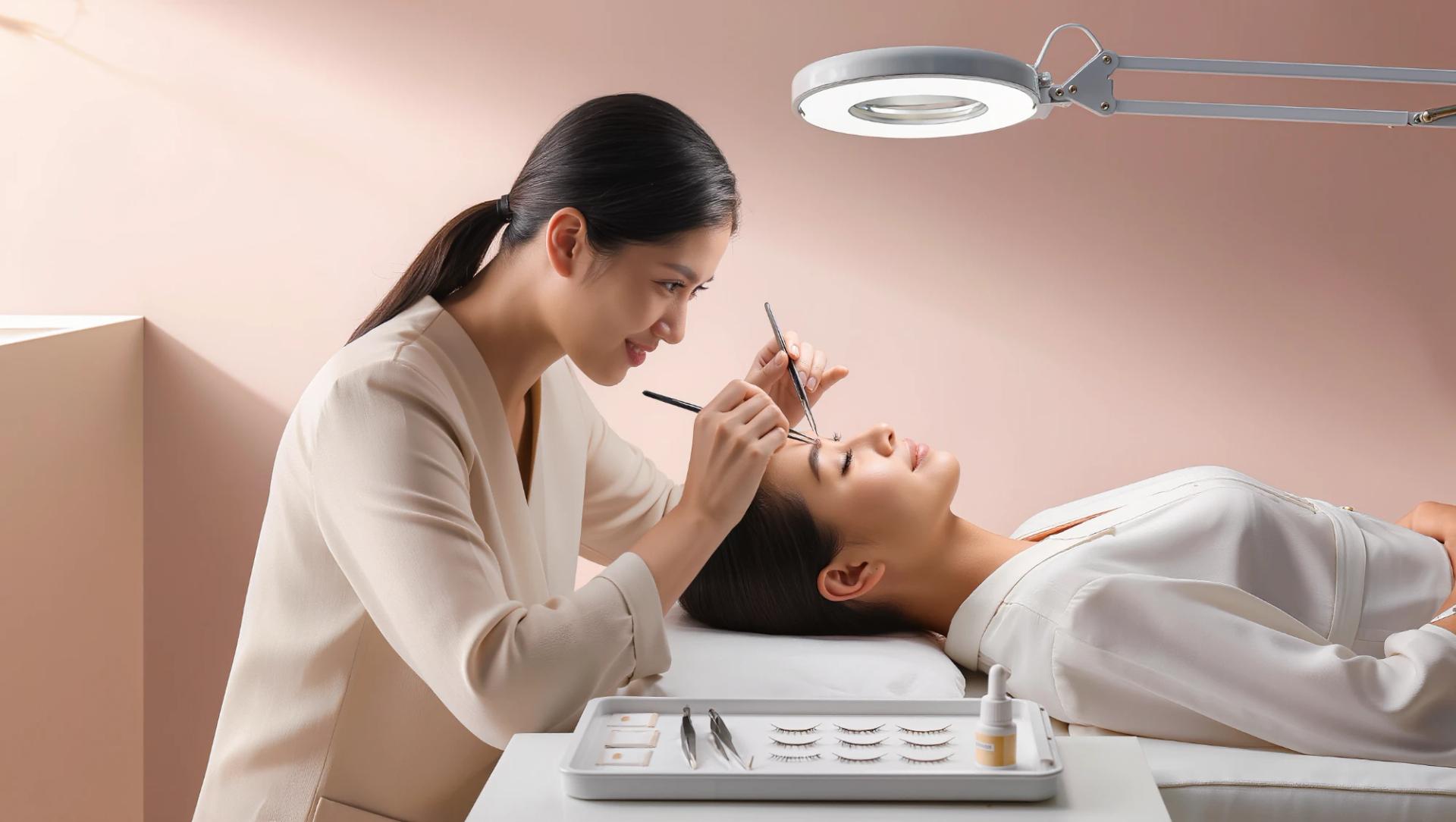
Lash extensions are one of the steadiest bookings in any Singapore salon. Clients come back every two to four weeks for infills, which means a trained lash tech builds recurring income rather than chasing one-off jobs. That is the honest appeal of the career, and it is why so many people ask us about training.
Do you need a licence in Singapore?
No. Singapore does not require a government licence to apply lash extensions, and there is no mandatory national certification. That surprises people, and it cuts both ways: you can start sooner than in many countries, but the quality bar is set entirely by where you train.
What you do need is genuine competence around the eye. You are working millimetres from the cornea with a cyanoacrylate adhesive. Poor isolation causes lashes to be glued together, which damages the natural lash as it grows out. Poor hygiene causes infections. Neither is theoretical — both are the most common reasons clients leave a lash tech and never come back.
What a proper course covers
A weekend crash course will teach you to stick lashes on. It will not teach you to keep them on, or to handle the eye shapes and skin types that make up real clients. A foundation course worth paying for covers all of this:
- Eye anatomy and the natural lash growth cycle
- Hygiene, sanitation and patch testing
- Isolation technique and correct placement
- Adhesive handling, humidity and cure time
- Curls, lengths and thickness selection
- Mapping and styling for different eye shapes
- Safe removal and infill technique
- Client consultation and aftercare advice
Two of those deserve a special mention. Adhesive handling and humidity is the one that separates trained techs from self-taught ones in Singapore — our humidity sits high year round, which makes glue cure faster than most international tutorials assume. And mapping is what makes a set look designed rather than merely applied.
How long it takes
Foundation training runs around 20 hours of hands-on work. That is enough to apply a clean classic set safely and confidently. Getting to volume work — the handmade fans behind 3D to 6D sets — takes roughly double that again, because fan-making is a physical skill that only comes with repetition.
| Stage | Training time | What you can do after |
|---|---|---|
| Foundation | ~20 hours | Safe classic sets, removals, infills |
| Volume | 40+ hours total | Handmade fans, 2D-6D, complex eye shapes |
| Speed & business | Ongoing | Full sets inside 2 hours, profitable pricing |
Speed is the one people underestimate. A new tech might take three and a half hours on a full set. An experienced one does the same set in under two. Since you charge per set and not per hour, that difference is your entire hourly rate.
What it costs to start
Training is the main cost, and a good course should include your starter kit rather than sending you off to source tweezers and adhesive alone. At SkinBar the tiers work like this:
Master Lash Course
From $988
~20 hours. Foundation classic work, kit included, certificate on completion.
Professional Lash Programme
From $1,688
40+ hours. Adds volume fans, retention troubleshooting, pricing and marketing.
Complete Nail + Lash
From $2,688
~80 hours across both disciplines, for anyone building a full service menu.
Beyond training, budget for consumables. Adhesive has a short shelf life once opened and needs replacing every one to two months whether you use it or not, so factor that in rather than treating your kit as a one-off purchase.
What you can realistically earn
Classic sets in Singapore commonly start around $58 and volume sets run to $88 and above, with infills at a lower rate every two to four weeks. The arithmetic is straightforward, but two things get missed.
First, infills are the business, not new sets. A client who returns every three weeks for a year is worth far more than a one-off full set, and retention depends on technique. Sets that drop early do not come back.
Second, your first six months are slow. You will be building a portfolio, working on friends at reduced rates, and going slowly. Anyone quoting you a monthly income figure without mentioning that is selling a course, not describing a career.
Who it actually suits
- Complete beginners with zero beauty experience
- Career switchers wanting a skill they can practise part-time first
- Nail or brow artists adding lashes to an existing client base
- Anyone planning a home-based service around family hours
Be honest with yourself about two things before you book. You need steady hands and the patience to sit still and focused for two hours at a stretch. And you need to be comfortable being very close to people's faces all day. Neither is a dealbreaker for most people, but both are the job.
Choosing where to train
Ask how many hours are hands-on rather than demonstration, and how many students share one trainer. Small-group or one-to-one guidance matters more than any syllabus, because isolation technique is corrected by someone watching your hands, not by a slide.
Ask what happens after the course ends too. Retention problems show up weeks later, once you are working on real clients, and that is exactly when you need someone to ask.
Curious what the treatment looks like from the client's side first? Our guides to how long lash extensions last and lash lift versus extensions cover what your future clients will be asking you.
Train With Us in Serangoon
From $988 · Kit included · Flexible scheduling · At SkinBar, 2A Maju Ave Level 2, Serangoon Garden